For over fifteen years, I’ve been in the trenches with C-suite executives, guiding them through one of the most consequential decisions a company can make: migrating their core operations to the cloud. The conversations have shifted dramatically. It’s no longer about if a business should adopt a cloud ERP, but how and when to do it for maximum impact. A legacy, on-premise system in 2026 isn’t just outdated; it’s a boat anchor holding your business back from agility, innovation, and growth.
The market is flooded with acronyms, promises of digital transformation, and dazzling demos. But the real challenge lies in cutting through the noise to understand how these platforms actually work and what they can deliver. Many leaders I consult with are rightfully wary of massive IT projects that promise the world but deliver budget overruns and operational disruption.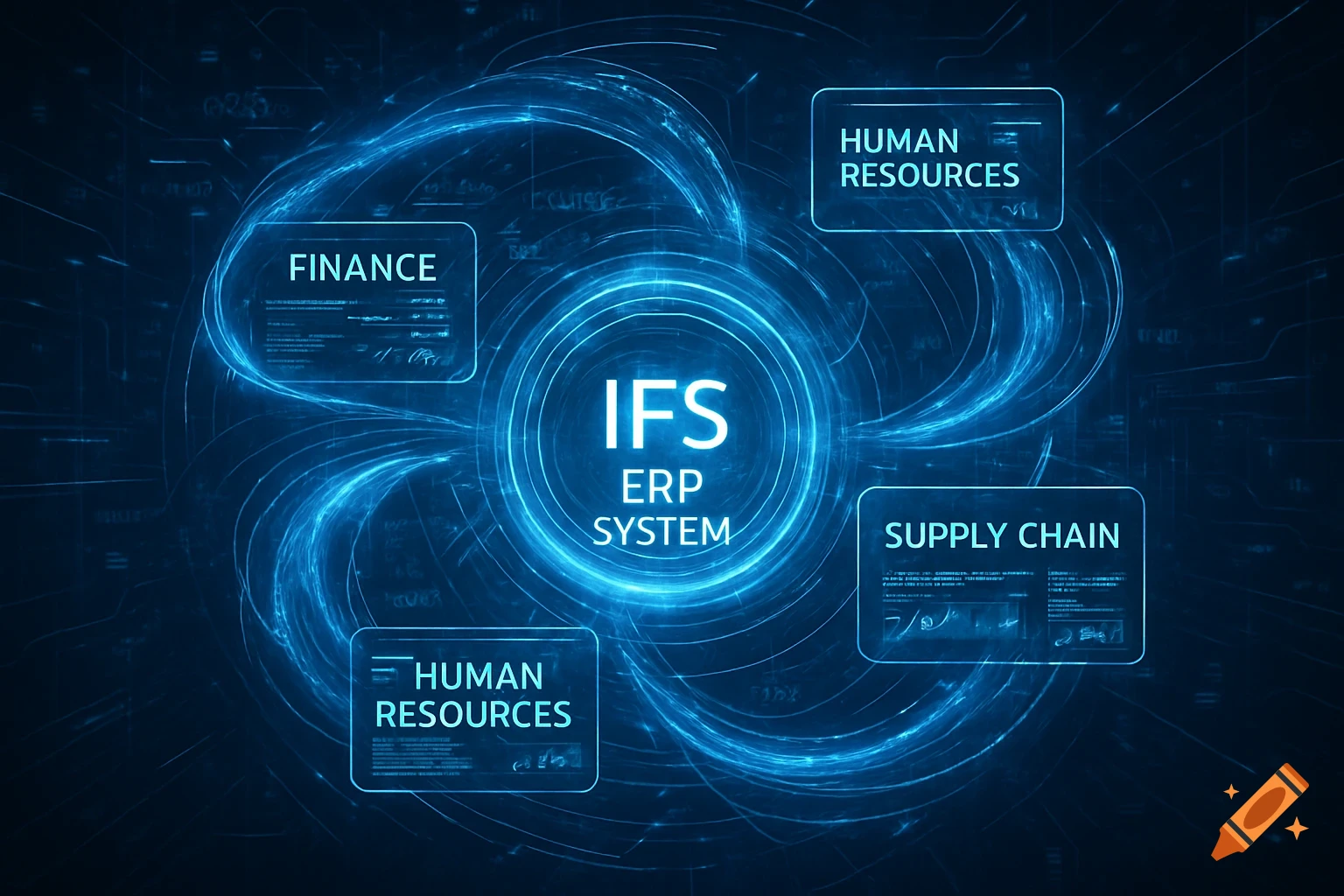
This is where we go deeper. This is The Ultimate Guide to Cloud ERP Systems: Driving Digital Transformation and ROI in 2026. Drawing from direct, hands-on experience with multi-million dollar implementations, this guide will provide you with the strategic framework to not only select the right system but to orchestrate a successful transformation that yields a tangible return on your investment.
The Evolving Cloud ERP Landscape & Technology Innovations
The term “ERP” itself is evolving. In the past, it was a monolithic system of record—a digital filing cabinet. Today’s cloud ERP systems are intelligent platforms designed to be the central nervous system of your entire enterprise. They’ve moved from passive data storage to active business intelligence engines.
Beyond a Digital Ledger: What is a Modern Cloud ERP?
In my experience managing large-scale projects, the biggest mindset shift for stakeholders is understanding that a modern ERP isn’t just a new version of their old accounting software. It’s an integrated suite of applications that leverages a single, unified database to manage everything from financials and human resources to supply chain management and customer relationships.
Technically, this is often built on a multi-tenant cloud architecture. This means your instance of the software runs on shared computing resources managed by the vendor. This model is what drives the lower TCO—you’re not buying and maintaining servers—and enables seamless, automatic updates, ensuring you’re always on the latest, most secure version without painful upgrade projects.
Author’s Expert Note: The single, unified database is the secret sauce. When sales data from your CRM, inventory levels from your SCM, and financial data from your accounting module all reside in the same logical place, you can generate real-time, cross-functional reports that were impossible with siloed, on-premise systems.
AI and Machine Learning Integration
Artificial intelligence is no longer a buzzword; it’s a core competency of leading cloud ERP platforms. We’re not talking about simple automation; we’re talking about predictive and prescriptive analytics embedded directly into your workflows. For a deeper dive, our guide on AI-Driven ERP: Revolutionizing Business Operations and Decision-Making in 2026 covers this in detail.
For instance, an AI-infused ERP can analyze historical sales data, market trends, and even weather patterns to generate startlingly accurate demand forecasts. In the field, I’ve seen this reduce inventory carrying costs by up to 30% for a mid-sized distribution client, freeing up millions in working capital. The system doesn’t just show you what happened; it advises you on what to do next.
The Rise of Composable and Headless Architectures
One of the most exciting shifts is toward what the industry calls “composable” ERP. The old model was a rigid, all-or-nothing suite. The new model is an agile, API-first framework where you can plug-and-play best-of-breed applications to build a system that perfectly fits your unique processes. You can learn more about this in our article on Composable ERP Architecture: Building Agile and Future-Proof Business Systems for Enterprise Growth.
This architecture is the foundation for advanced process automation. By connecting your ERP to other specialized tools via APIs, you can achieve unprecedented levels of efficiency. This is the core concept behind Hyper-automation in Cloud ERP: Streamlining Enterprise Processes for Unprecedented Efficiency, which moves beyond simple task automation to orchestrating complex, end-to-end business workflows.
Strategic Cloud ERP Selection & Industry-Specific Considerations
Choosing an ERP is a multi-year commitment. A misstep here can have profound financial and operational consequences. The selection process must be as rigorous and data-driven as the system you hope to implement. A great starting point is our detailed guide on Choosing the Right Cloud ERP: A Strategic Framework for Enterprise Vendor Selection.
Defining Your Core Business Requirements
Before you even look at a single demo, you must deeply understand and document your own processes. A common hurdle I’ve seen in the field is a rush to the “solution” phase without a thorough diagnosis of the problem. You must map your current-state workflows and, more importantly, define your ideal future-state workflows.
Warning/Caution: Do not let a vendor’s sales team define your requirements for you. They will naturally steer you toward their strengths. Your documented requirements document should be the north star of your selection process, used to objectively score every potential partner.
Vertical vs. Horizontal ERP Solutions
Horizontal ERPs, like NetSuite or Dynamics 365, are designed to be a jack-of-all-trades, suitable for a wide range of industries. Vertical ERPs are built from the ground up for a specific niche, like manufacturing or financial services. They come with pre-built modules, reports, and workflows that align with industry best practices and compliance standards.
For example, a manufacturing firm has complex needs around bill of materials (BOM), shop floor control, and supply chain logistics. A generic ERP would require heavy, costly customization. In this case, exploring the Best Cloud ERP for Manufacturing: Optimizing Production, Supply Chain, and Inventory in 2026 is a far more strategic move. Similarly, firms in finance need robust tools for compliance, which is why a specific Cloud ERP for Financial Services: Enhancing Compliance, Reporting, and Risk Management is essential.
The Critical Role of Vendor Due Diligence
Once you have a shortlist, the real work begins. Go beyond the marketing materials. Ask for reference calls with companies of a similar size and complexity. Dig into the technicals: What is their data center uptime? What are their security certifications (e.g., SOC 2 Type II, ISO 27001)? What does their product roadmap for the next 3-5 years look like?
A vendor is not just a software provider; they are a long-term partner. Their financial stability, R&D investment, and support infrastructure are just as important as the features in their software. I’ve seen companies get burned by choosing a flashy but unstable provider who was acquired and had their product sunsetted a few years later.
Comparing Top Cloud ERP Vendors for 2026
The Cloud ERP market is dominated by a few major players, each with distinct strengths and target audiences. The right choice depends entirely on your company’s scale, industry, and technical maturity. Here’s a high-level, objective comparison based on my field experience.
| Vendor/Platform | Target Audience | Core Strengths | Potential Drawbacks | AI Capabilities |
|---|---|---|---|---|
| SAP S/4HANA Cloud | Large enterprises, multinational corporations | Deep industry functionality, powerful in-memory database (HANA), robust manufacturing and supply chain modules. | Complex implementation, higher TCO, can be rigid if not implemented correctly. | Embedded SAP Leonardo AI/ML for predictive analytics, process automation. |
| Oracle NetSuite | Small to Mid-sized Businesses (SMBs), high-growth startups | True “all-in-one” suite (ERP, CRM, e-commerce), rapid implementation, born-in-the-cloud architecture. | Can be less flexible for complex, multi-entity manufacturing operations. | Strong in financial planning & analysis (FP&A), demand planning, and lead scoring. |
| Microsoft Dynamics 365 | Mid-market to large enterprises, companies heavily invested in the Microsoft ecosystem | Seamless integration with Office 365/Azure, strong CRM (Sales) and F&O modules, flexible licensing. | Can feel like a collection of apps rather than one unified suite, relies on partner channel for implementation. | Leverages the full Azure AI stack, including Power BI for visualization and AI Builder for custom models. |
| Infor CloudSuite | Mid-market to large enterprises in specific verticals (e.g., manufacturing, distribution, healthcare) | Deep, pre-configured industry-specific functionality (“last-mile features”), user-friendly interface. | Less brand recognition outside its core verticals, smaller partner ecosystem than the “big three.” | “Coleman AI” platform focused on providing contextual recommendations and automating repetitive tasks. |
Mastering Cloud ERP Implementation & Post-Launch Success
The single most important takeaway from my career is this: technology is only 20% of an ERP project’s success. The other 80% is people and process. A flawless technical implementation will fail if your team doesn’t adopt the system or if your processes are fundamentally broken. For a complete overview, review our guide on Cloud ERP Implementation Best Practices: Navigating Challenges and Ensuring Enterprise Success.
Navigating Data Migration Challenges
The “garbage in, garbage out” principle is ruthlessly true in ERP projects. You cannot simply dump data from your old, disparate systems into a new, pristine ERP. This requires a dedicated data cleansing, validation, and mapping effort. It’s tedious, but absolutely critical.
A common field error I consistently encounter is underestimating the resources needed for this phase. Effective Data Migration Strategies for Cloud ERP: Ensuring Accuracy and Minimizing Downtime often involve a mini-project of their own, with dedicated data stewards from each business department responsible for verifying the accuracy of their respective data sets before migration.
Driving User Adoption: The Human Element
You can’t just throw a new system at your employees and expect them to use it. Change management is not an optional add-on; it must be woven into the project from day one. This involves clear communication, executive sponsorship, and comprehensive training.
Your goal isn’t just to teach people which buttons to click. It’s about showing them “what’s in it for me?” How does this new system make their job easier, more efficient, or more impactful? Investing in robust User Adoption & Training in ERP Rollouts: Maximizing ROI Through Empowered Teams is the single best way to ensure you realize the full value of your software investment.
Measuring & Maximizing Cloud ERP ROI and Value
Securing the budget for an ERP requires a compelling business case built on a solid understanding of ROI. But the real value of The Ultimate Guide to Cloud ERP Systems: Driving Digital Transformation and ROI in 2026 lies in understanding that the benefits extend far beyond simple cost savings.
Calculating Total Cost of Ownership (TCO) vs. ROI
TCO includes software subscriptions, implementation fees, training, and internal resource costs. It’s a critical number, but it only tells half the story. The other half is Return on Investment. This is where you quantify the gains: reduced inventory costs, improved operational efficiency, faster financial close times, and increased sales productivity.
A detailed guide to building this financial model can be found in our article on Calculating Cloud ERP ROI: A Comprehensive Guide to Justifying Your Investment. It’s a crucial step in gaining executive buy-in.
Unlocking Value Beyond TCO
The most significant benefits are often the hardest to quantify. How do you measure the value of business agility? Or better decision-making? These “soft” benefits are what truly drive transformation. This is what we mean when we talk about going Beyond TCO: Understanding the Full Value Proposition of Cloud Enterprise Resource Planning Systems.
In one engagement, a client used the real-time analytics from their new cloud ERP to identify an underperforming product line and pivot resources to a more profitable one, a move that saved the division. That strategic insight doesn’t appear in a simple TCO calculation but represents immense value.
Sustainability and Green ERP Initiatives
Increasingly, companies are being measured on their environmental, social, and governance (ESG) performance. Modern cloud ERPs provide the tools to track energy consumption, supply chain ethics, and carbon footprint. Leveraging Green ERP: How Cloud Systems Drive Sustainability and Reduce Environmental Impact in 2026 is becoming a competitive differentiator and a core component of corporate responsibility.
Advanced Cloud ERP Considerations & Security
As you move toward implementation, several advanced topics will become critical. These often involve balancing competing priorities, such as flexibility versus maintainability, and ensuring your most critical asset—your data—remains secure.
Integrating with Your Existing Tech Stack
No ERP lives in a vacuum. It must communicate with your CRM, HRIS, e-commerce platform, and other line-of-business applications. A modern, API-first architecture is non-negotiable here. A thoughtful approach to Integrating Cloud ERP with Your Existing Tech Stack: Strategies for Seamless Operations ensures data flows freely and prevents the creation of new information silos.
The Customization vs. Configuration Debate
Configuration involves using the software’s built-in tools to adapt it to your processes. Customization involves writing custom code to alter the software’s fundamental behavior. My advice after 15 years: favor configuration 99% of the time. Custom code is brittle, expensive to maintain, and can break during vendor updates. Navigating the Customization vs. Configuration in Cloud ERP: Balancing Flexibility with Maintainability for Long-Term Success is a key strategic decision.
Enterprise-Grade Security and Compliance
Moving your company’s most sensitive data to the cloud requires an unwavering focus on security. Leading vendors invest billions in securing their infrastructure, far more than any single company could afford. However, the responsibility is shared. You must understand the vendor’s security posture and implement your own best practices. Our guide to Cloud ERP Security: Protecting Your Enterprise Data in a Connected Global World is essential reading for any project leader.
Frequently Asked Questions about Cloud ERP Systems in 2026
What is the main difference between cloud ERP and on-premise ERP?
The primary difference is hosting. Cloud ERP is hosted and managed by the vendor on their servers and accessed via the internet for a subscription fee. On-premise ERP is installed on your own servers, which you must purchase and maintain, and is managed by your IT team.
How long does a typical cloud ERP implementation take?
In my experience, a mid-market implementation can take anywhere from 6 to 12 months. Large enterprise projects can take 18-24 months or more. The timeline is driven more by business process re-engineering and data migration than the technology itself.
Is a cloud ERP secure for sensitive financial data?
Yes, reputable cloud ERP vendors have security measures (encryption, firewalls, physical security) that far exceed what most individual companies can provide. However, you are still responsible for user access controls and security policies within your organization.
What are the hidden costs of a cloud ERP system?
Common hidden costs include data migration, third-party integration development, extensive user training, and change management consulting. Always budget a 15-20% contingency for unforeseen complexities during the project.
Can I switch cloud ERP vendors easily?
No, switching ERPs is a major undertaking due to the complexity of data extraction and migration, process re-mapping, and user retraining. It is a long-term partnership, which is why the initial selection process is so critical.
How does cloud ERP support remote work?
Cloud ERP is inherently designed for remote work. Since it’s accessed through a web browser, any employee with an internet connection and proper credentials can access the system from anywhere, on any device, ensuring business continuity.
What is a multi-tenant vs. single-tenant cloud ERP?
In a multi-tenant environment, multiple customers (tenants) share the same application and infrastructure, with their data securely partitioned. Single-tenant provides a dedicated instance of the software and infrastructure, offering more control but at a much higher cost.
How do I prepare my team for an ERP implementation?
Start with clear and early communication about the “why” behind the change. Involve key users from each department in the design and testing phases to create project champions. Invest heavily in training and post-go-live support.
Conclusion
Embarking on a cloud ERP journey is one of the most strategic initiatives your business will undertake. It is far more than an IT project; it is a fundamental business transformation. As we’ve explored, the path to success in 2026 is paved with careful planning, deep technical understanding, a relentless focus on your people and processes, and a commitment to measuring what matters. From AI-driven insights to composable architectures, the technology offers unprecedented potential to create a more agile, intelligent, and resilient enterprise.
This ultimate guide to cloud ERP systems is your strategic roadmap. Use these real-world insights, frameworks, and warnings to build a powerful business case, select the right partner, and lead an implementation that drives significant digital transformation and ROI. The future of your business operations depends on the choices you make today, and a well-executed cloud ERP is the foundation upon which that future will be built.
Originally posted 2026-05-01 01:35:59.