I’ve sat in countless boardrooms where the promise of a new, powerful Cloud ERP system felt like the dawn of a new era for the company. The excitement is palpable. But then, the conversation shifts to the existing tech stack—the trusted CRM, the custom-built logistics platform, the legacy HR system—and a shadow of complexity creeps in. The single biggest point of failure for these multi-million dollar projects isn’t the ERP itself; it’s the integration.
For over fifteen years, I’ve been on the front lines of these digital transformation projects. The truth is, a Cloud ERP in isolation is just a powerful database. Its real value is unlocked only when it becomes the central nervous system of your entire organization. This article serves as my practitioner’s guide to Integrating Cloud ERP with Your Existing Tech Stack: Strategies for Seamless Operations, moving beyond theory to share what actually works in the field.
We’ll dissect the critical planning stages, explore the core integration architectures you must understand, and walk through the execution pitfalls I’ve seen derail even the most promising projects. By the end, you’ll have a strategic framework to ensure your new ERP doesn’t just add to the noise but truly unifies your operations.
The Foundational Blueprint: Auditing Your Current Tech Stack
Before you write a single line of code or sign a contract with an integration partner, you must start with a deep, honest audit of your existing ecosystem. In my experience, skipping this foundational work is the number one cause of scope creep and budget overruns. You can’t build a bridge without knowing the landscape on both sides.
Mapping Your Data Flows and Dependencies
First, we need to become cartographers of our own data. This isn’t just about listing applications; it’s about tracing the journey of critical data entities. For example, how does a “customer” move through your systems? It might originate in your marketing automation tool, become a lead in your CRM, convert to a customer in your ERP for billing, and have a support history in your helpdesk software.
You must visually map these flows. I recommend using tools like Lucidchart or Miro to create diagrams that show which system is the “source of truth” for each key piece of data and how it’s shared, transformed, or updated by other applications. This map will become your most valuable asset in planning.
Identifying Redundancies and “Shadow IT”
During the audit, you’ll inevitably uncover redundancies. I once worked with a client who had three different applications performing customer analytics because individual departments had purchased their own solutions over the years. This is a classic example of “Shadow IT,” where technology is managed outside the purview of the central IT department.
Identifying these overlaps is crucial. Integrating a new ERP is the perfect opportunity to decommission redundant systems, streamline processes, and consolidate your software footprint. This not only reduces complexity and cost but also improves data integrity by eliminating conflicting data sources.
Defining Your Integration Goals and KPIs
Finally, what does success look like? Vague goals like “improve efficiency” are useless. You need concrete, measurable Key Performance Indicators (KPIs). Are you trying to reduce order-to-cash cycle time? Decrease manual data entry errors? Provide a 360-degree customer view to your sales team in real-time?
Define these goals upfront. For instance, a clear goal might be: “Reduce the time to sync a new customer record from CRM to ERP from 4 hours (manual batch) to under 2 minutes (real-time API call).” These specific KPIs will guide your architectural decisions and help you prove the project’s ROI later on.
Choosing Your Integration Architecture: APIs, Middleware, and iPaaS
Once you understand your landscape, it’s time to choose the right tools and architecture to build your bridges. This is where many teams get paralyzed by choice. Let’s break down the primary methods I’ve implemented in the field, moving from the simplest to the most sophisticated.
The Power of API-Led Connectivity
At its core, modern integration relies on Application Programming Interfaces (APIs). Think of an API as a waiter in a restaurant. You (an application) don’t go into the kitchen (another application’s database) to get what you need; you give your order to the waiter (the API), who handles the communication and brings back the result.
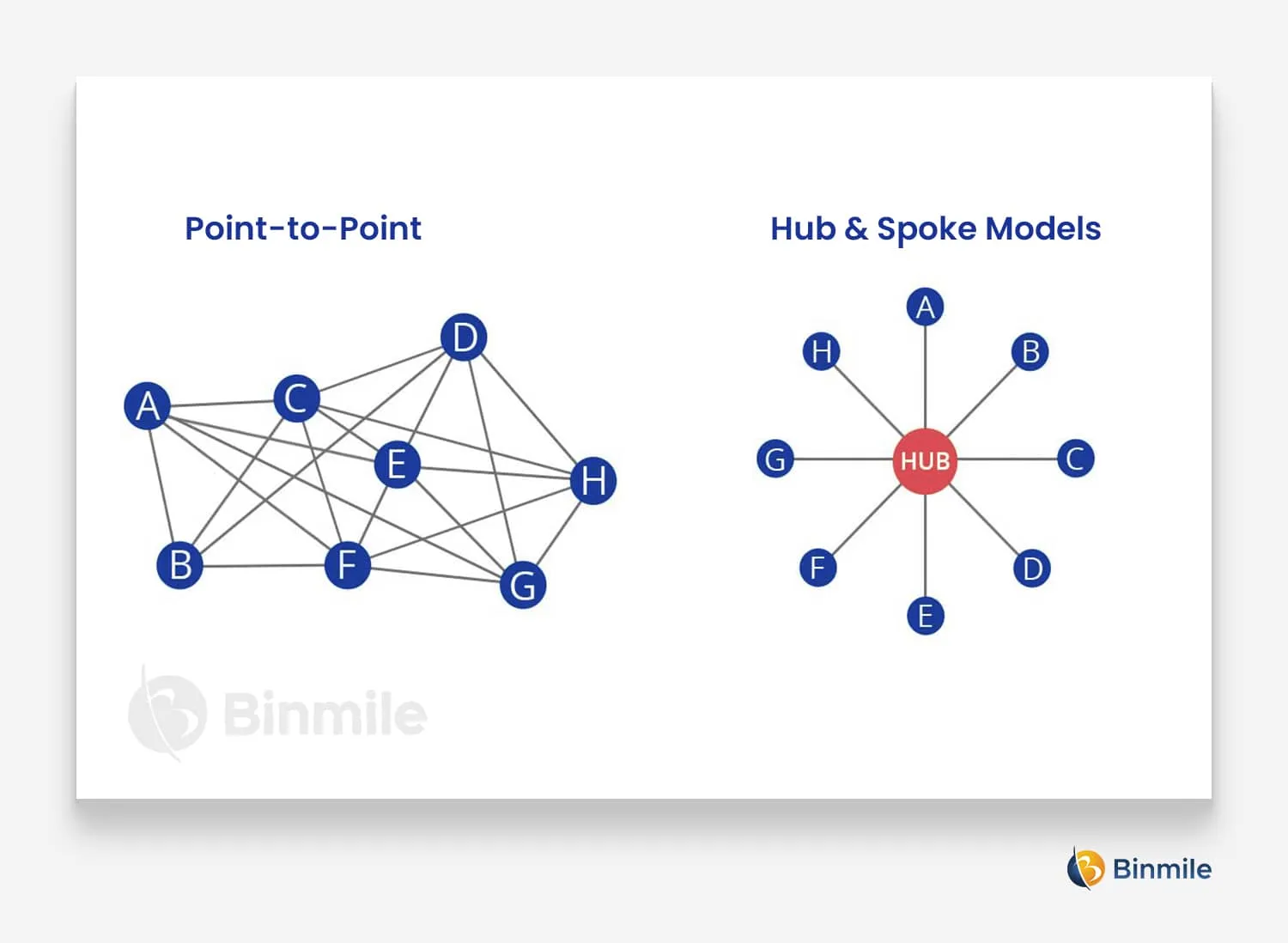
Most modern Cloud ERPs and SaaS applications offer robust REST (Representational State Transfer) APIs, which are flexible and use standard web protocols. A point-to-point integration directly connects two applications via their APIs. While this is fast for a single connection, it quickly becomes a tangled mess—what we call “spaghetti architecture”—as you add more systems.
The Role of Middleware as a Central Hub
A more structured approach is using middleware, often implemented as an Enterprise Service Bus (ESB). Middleware acts as a central “hub” or a universal translator. Instead of connecting every application to every other application, you connect each application just once—to the hub. The middleware then handles the routing, transformation, and orchestration of data between the systems.
In my years of consulting, I’ve seen middleware dramatically simplify maintenance. If you need to update or replace your CRM, you only have to change its single connection to the hub, not the dozens of point-to-point connections it might have had. This hub-and-spoke model is far more scalable and manageable.
Evaluating Integration Platform as a Service (iPaaS) Solutions
The modern evolution of middleware is iPaaS. Solutions like MuleSoft, Boomi, or Jitterbit provide a cloud-based platform with pre-built connectors, graphical workflow builders, and management tools. This can significantly accelerate development and lower the barrier to entry for complex integrations.
The key advantage of iPaaS is that it abstracts away much of the underlying infrastructure management. Your team can focus on the business logic of the integration rather than managing servers and a complex software stack. For most businesses adopting a cloud-first strategy, iPaaS is now the default choice.
Author’s Expert Note: The future is in “composable ERPs,” where businesses assemble best-of-breed applications held together by a powerful integration fabric, typically an iPaaS. Instead of a monolithic ERP trying to do everything, you get the best CRM, the best SCM, etc., all working in harmony. A solid Cloud ERP integration strategy is the first step toward this more agile, future-proof model.
Comparing Cloud ERP Integration Approaches
Choosing the right integration model is a strategic decision with long-term consequences. I’ve built this table to provide an objective comparison of the common approaches I’ve implemented, helping you weigh the trade-offs based on your organization’s scale, budget, and technical expertise.
| Attribute | Point-to-Point (P2P) | Middleware / ESB | iPaaS (Integration Platform as a Service) |
|---|---|---|---|
| Scalability | Low. Becomes unmanageable (“spaghetti”) with more than a few systems. | High. The hub-and-spoke model allows for adding new systems without disrupting existing ones. | Very High. Cloud-native architecture designed for elasticity and high volume. |
| Initial Cost | Low. Can be simple custom code for one or two connections. | High. Requires significant investment in software licenses and specialized developers. | Medium. Subscription-based, but can be expensive at enterprise scale. Avoids hardware costs. |
| Maintenance Overhead | High. Each connection is a separate point of failure and must be maintained individually. | Medium. Centralized, but the platform itself requires maintenance, patching, and upgrades. | Low. The vendor manages all platform infrastructure, patching, and core updates. |
| Development Speed | Fast for the first connection, but slows exponentially as the system grows. | Slow to Medium. Requires specialized expertise and a longer setup phase. | Fast. Pre-built connectors and low-code/no-code interfaces accelerate development significantly. |
| Best For | Very small businesses with only 2-3 applications to connect. | Large enterprises with complex, on-premise legacy systems and dedicated IT teams. | Cloud-first organizations of all sizes seeking agility, speed, and reduced management overhead. |
Executing the Integration: A Phased Approach
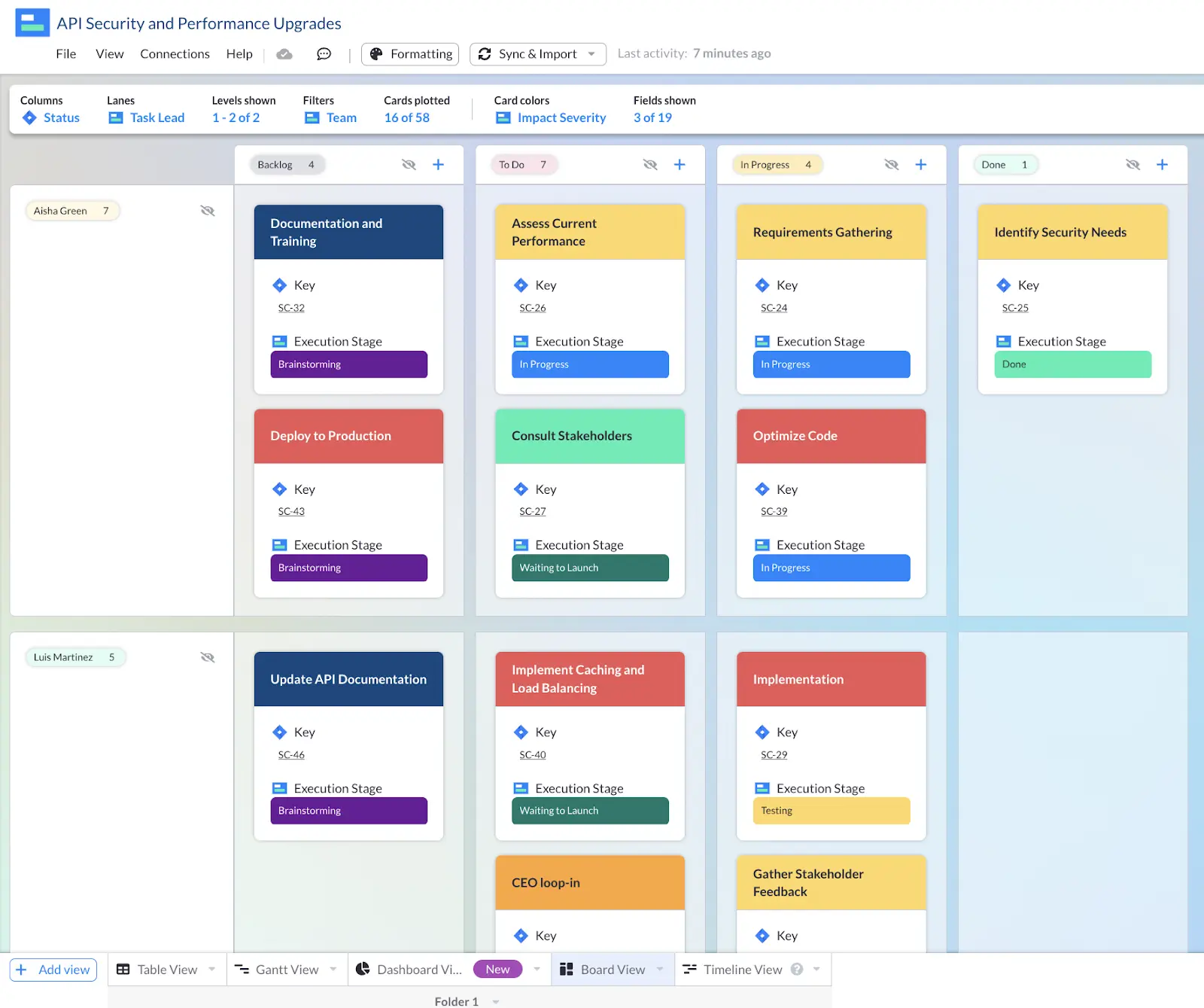
With a plan and architecture in hand, execution begins. A common hurdle I’ve seen in the field is the temptation to do everything at once. A disciplined, phased approach is less risky and delivers value faster. This is where project management rigor meets technical execution.
The Critical Data Migration and Cleansing Phase
You cannot move messy data into a pristine new ERP system. The “Garbage In, Garbage Out” principle is unforgiving. Before you integrate, you must perform a thorough data cleansing, de-duplication, and transformation exercise. This is often the most time-consuming part of the project but is absolutely non-negotiable.
This process involves extracting data from legacy systems, transforming it into the format required by the new Cloud ERP, and loading it. This is known as the ETL (Extract, Transform, Load) or ELT (Extract, Load, Transform) process. Failure to properly map and cleanse data here will lead to operational chaos post-launch.
Developing and Testing Connectors
Whether you’re writing custom API code or configuring an iPaaS workflow, each connection point needs to be meticulously built and tested. This includes not just the “happy path” where everything works perfectly, but also robust error handling. What happens if an API is temporarily unavailable? What if a record fails to sync?
Your testing strategy must include unit tests (testing the individual components), integration tests (testing the connections between systems), and user acceptance testing (UAT), where actual business users validate the workflows from end to end.
Warning: Inadequate testing is the silent killer of integration projects. The pressure to “go-live” often leads teams to cut corners on testing edge cases. I have personally seen this result in catastrophic data corruption, requiring weeks of manual cleanup and causing a complete loss of faith in the new system from day one. Do not make this mistake.
Go-Live Strategy: Big Bang vs. Phased Rollout
You have two primary options for launch. The “Big Bang” approach is where you switch everything over at once, typically over a weekend. It’s high-risk, high-reward. A “Phased Rollout” involves migrating functionality, departments, or geographic locations incrementally.
From my perspective, a phased rollout is almost always preferable. It allows the team to learn and adapt, reduces the blast radius of any potential issues, and gives users more time to adjust to the new system. It may extend the project timeline, but it dramatically increases the probability of a successful, low-stress launch.
Expert Strategies for Long-Term Success
Getting to go-live is just the beginning. A truly seamless tech stack requires ongoing governance and optimization. Here are a few strategies I insist on for any client project to ensure the integration delivers value for years to come.
- Establish an Integration Center of Excellence (CoE): Don’t let integration be a one-off project. Create a dedicated team or function responsible for managing, monitoring, and governing all integrations. The CoE sets standards, provides reusable assets, and ensures a consistent approach across the enterprise.
- Prioritize Data Governance and Security: With data flowing freely between systems, clear ownership and governance are paramount. Define who can create, read, update, or delete data in each system. This is also where security becomes critical. For a deeper dive, I recommend our guide on Cloud ERP security, as a breach in one connected system can compromise the entire ecosystem.
- Plan for Scalability and Change: Business needs change. You will acquire new companies, launch new products, and adopt new applications. Your integration architecture must be flexible enough to accommodate this change without requiring a complete overhaul. This is another reason why iPaaS and API-led approaches are so powerful.
- Implement Robust Monitoring and Alerting: You need to know the moment an integration fails, not when a user complains hours later. Implement real-time monitoring dashboards and automated alerts that notify your CoE of API failures, data sync errors, or performance bottlenecks. Proactive monitoring builds trust and prevents small issues from becoming major incidents.
Frequently Asked Questions about Integrating Cloud ERP with Your Existing Tech Stack: Strategies for Seamless Operations
What is the biggest risk in a Cloud ERP integration project?
The biggest risk is a lack of upfront planning. Diving into development without a clear data map, defined goals, and the right architecture is the most common path to project failure, budget overruns, and operational disruption.
How long does a typical Cloud ERP integration take?
This varies widely, but for a mid-sized company with a moderately complex stack, I typically see projects last from 6 to 18 months. The complexity of legacy systems and the quality of your data are the biggest factors.
Should we use the ERP vendor’s native integration tools?
Often, yes, for simple connections to common apps. However, for a complex, multi-system environment, a dedicated, vendor-neutral iPaaS solution provides far more flexibility, scalability, and control over your integration strategy.
What is the difference between real-time and batch integration?
Real-time integration syncs data instantly (or near-instantly) via APIs, which is ideal for processes like e-commerce order placement. Batch integration syncs data on a schedule (e.g., once every night), which is suitable for less time-sensitive processes like financial reporting.
Can we integrate our on-premise legacy systems with a Cloud ERP?
Absolutely. This is a very common scenario. It typically requires an integration platform (iPaaS or middleware) that has an on-premise agent or uses secure gateways to bridge the gap between your data center and the cloud.
Who should be on the integration project team?
Your team should include a project manager, integration architect, developers, business analysts from key departments (finance, sales, etc.), and an executive sponsor. Strong business involvement is crucial for success.
How do we handle data that exists in both systems?
You must establish a “single source of truth.” For example, the ERP is the source of truth for financial data, while the CRM is the source for customer contact information. The integration logic must enforce these rules to prevent data conflicts.
What’s the best way to budget for an integration project?
Your budget should include software/platform costs (iPaaS subscription), development/implementation partner fees, and significant internal resource time for planning, testing, and training. Underestimating the internal time commitment is a common budgeting error.
Conclusion
Successfully Integrating Cloud ERP with Your Existing Tech Stack: Strategies for Seamless Operations is less about a single technology and more about a strategic mindset. It’s about viewing your applications not as isolated islands, but as a cohesive, interconnected digital ecosystem. The journey requires meticulous planning, a forward-looking architectural choice, and a disciplined, phased execution. The most successful projects I’ve led were not the ones with the biggest budgets, but the ones with the most rigorous upfront discovery and a relentless focus on clear, measurable business outcomes.
By treating integration as a core strategic pillar of your digital transformation, you can unlock the true potential of your new ERP, breaking down data silos and creating the seamless operational flow that modern business demands. If you’re just starting this journey, I encourage you to explore our foundational resource, The Ultimate Guide to Cloud ERP Systems: Driving Digital Transformation and ROI in 2026, to build a comprehensive understanding. The effort is significant, but the reward—a truly connected and agile enterprise—is transformative.
“`
Originally posted 2026-05-01 07:57:22.