In my 15 years consulting on digital transformations for manufacturing firms, I’ve seen the shop floor evolve from a place of siloed machinery to a hyper-connected data ecosystem. The single most powerful catalyst for this change isn’t a new robot or a faster conveyor belt; it’s the strategic adoption of a robust, cloud-native ERP system. For any manufacturer looking to stay competitive, finding the Best Cloud ERP for Manufacturing: Optimizing Production, Supply Chain, and Inventory in 2026 is no longer an IT project—it’s a core business imperative.
Many companies are still shackled by legacy on-premise systems or, even worse, a tangled mess of disconnected spreadsheets. This approach creates data blind spots, cripples agility, and makes real-time decision-making impossible. It’s a recipe for falling behind in an industry where margins are tight and customer expectations are constantly rising.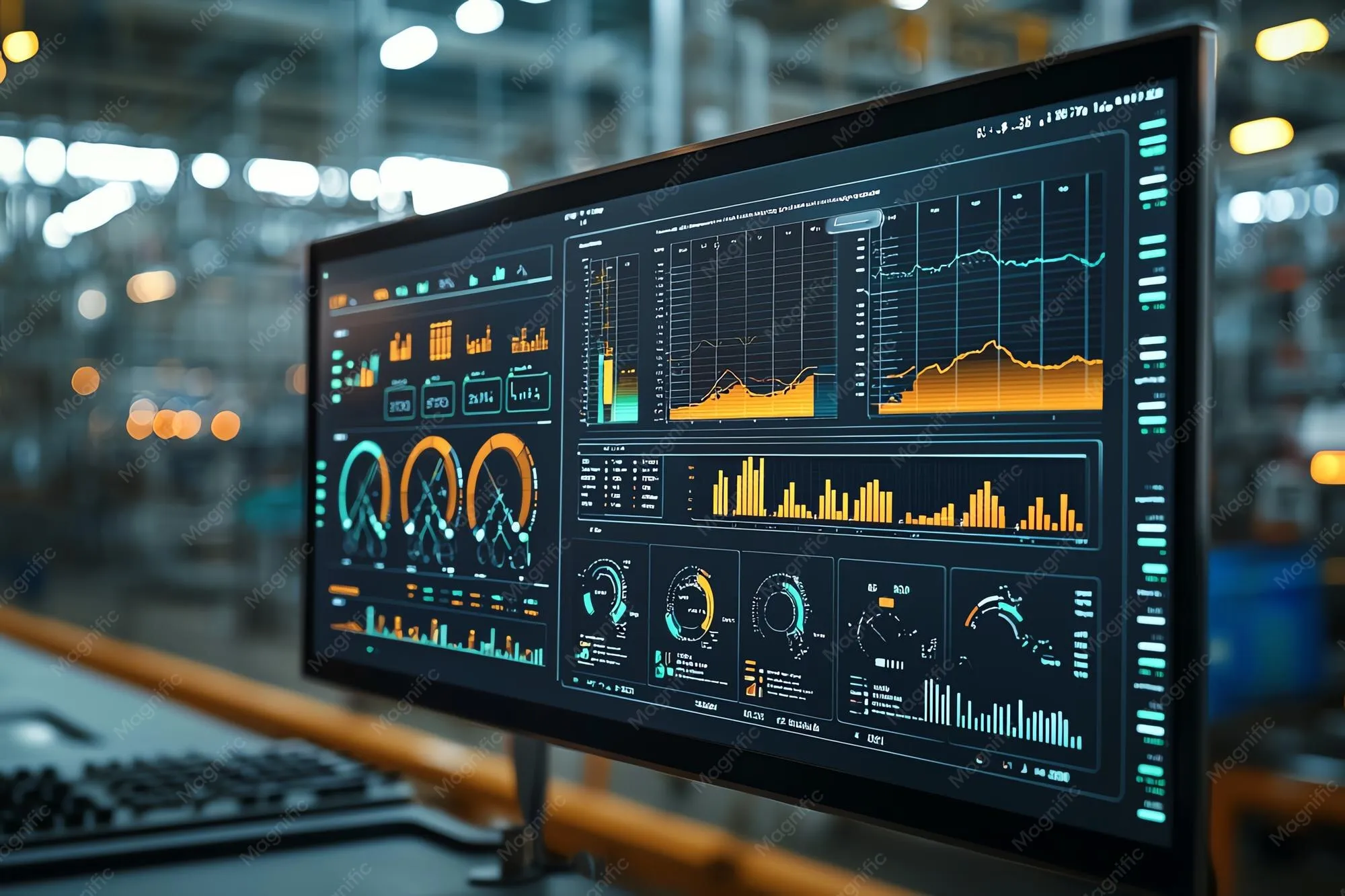
This article will cut through the marketing jargon and provide a practitioner’s-view of what truly matters. We’ll dissect the core functionalities you need, compare leading solutions from an unbiased standpoint, and I’ll share hard-won insights from the field to help you avoid common, costly mistakes in your selection and implementation journey.
Beyond Spreadsheets: Why Cloud ERP is Non-Negotiable
The conversation has fundamentally shifted. It’s no longer about if a manufacturer should move to the cloud, but how and when. The operational advantages are simply too significant to ignore, moving far beyond simple cost savings on server maintenance.
The Limitations of On-Premise and Legacy Systems
A common hurdle I’ve seen in the field is what I call “data latency.” With on-premise systems, data from the shop floor, warehouse, and finance department are often batched and processed overnight. A production manager might not know about a critical material shortage until the next morning, hours after a costly line stoppage has already occurred.
These legacy systems are also notoriously difficult and expensive to customize and upgrade. They become rigid monoliths that hinder innovation rather than enabling it. As I explain in The Ultimate Guide to Cloud ERP Systems: Driving Digital Transformation and ROI in 2026, the cloud-native architecture is designed for continuous improvement and integration, a stark contrast to the multi-year upgrade cycles of old.
Real-Time Data and the Democratization of Insights
The true power of a modern cloud ERP is its ability to serve as a single source of truth—in real-time. When a sales order is entered, the system can instantly check inventory levels, schedule production, and alert procurement to order necessary raw materials. This isn’t a sequential, manual process; it’s an automated, interconnected workflow.
From a technical standpoint, this is achieved through API-first architecture. Modern cloud ERPs are built to communicate seamlessly with other systems, like IoT sensors on machinery (providing Overall Equipment Effectiveness or OEE data), CRM platforms, and e-commerce front-ends. This allows everyone from the CEO to the line operator to make decisions based on the same live, accurate data.
Scalability and Agility in Volatile Markets
In my experience managing large-scale projects, one of the biggest benefits clients see is newfound agility. A manufacturer might need to quickly stand up a new production line or expand into a new geographic market. With a cloud ERP, scaling is a matter of adjusting a subscription plan, not purchasing and provisioning new server hardware, which can take months.
This elasticity allows manufacturers to respond to market demand shifts, supply chain disruptions, or new business opportunities with a speed that is simply impossible with on-premise infrastructure. It transforms IT from a cost center into a strategic enabler of growth.
Core Pillars of a Manufacturing-First Cloud ERP
Not all ERPs are created equal. A generic, finance-focused ERP will fail spectacularly in a manufacturing environment. You need a system built from the ground up to handle the unique complexities of production. Let’s break down the non-negotiable modules.

Advanced Production Planning and Scheduling (APS)
This is far more than just creating a basic production schedule. A true APS module uses algorithms to optimize scheduling based on multiple constraints: material availability, machine capacity, labor skills, tooling, and even maintenance schedules. It allows for “what-if” scenario planning to see the downstream impact of an expedited order or a machine breakdown.
Technically, this works by building a detailed model of your production environment. The system understands the precise runtime, setup time, and resource requirements for every step of your bill of materials (BOM) and routing. When a new order arrives, the APS engine calculates the most efficient path through the shop floor to meet the deadline without disrupting other orders.
Integrated Quality Management Systems (QMS)
Quality can’t be an afterthought. An integrated QMS module embeds quality checks directly into the production workflow. It can enforce inspections at specific routing steps, manage non-conformance reports (NCRs), and track corrective and preventive actions (CAPAs). This creates a full audit trail for compliance and continuous improvement.
One common field error I consistently encounter is companies trying to manage quality in a separate system. This creates a disconnect where production data and quality data don’t align, making root cause analysis nearly impossible. A native QMS module links a failed inspection directly to the specific work order, machine, operator, and raw material lot used.
Author’s Expert Note: Looking toward 2026, the most advanced ERPs are integrating AI and machine learning into their QMS modules. These systems can analyze sensor data from production equipment to predict potential quality defects *before* they occur, shifting from a reactive to a predictive quality control model. This is a game-changer for reducing scrap and rework.
Shop Floor Control and MES Integration
The ERP needs to have a direct, real-time link to the shop floor. This is often achieved through a dedicated Manufacturing Execution System (MES) module or tight integration with a third-party MES. This allows operators to report production progress, material consumption, and labor hours directly from a terminal or tablet on the floor.
This live feedback loop is critical. It updates inventory levels instantly, provides accurate job costing, and gives production managers a true, up-to-the-minute view of every work order’s status. It eliminates the delays and errors associated with manual data entry from paper-based shop travelers.
Optimizing the End-to-End Supply Chain
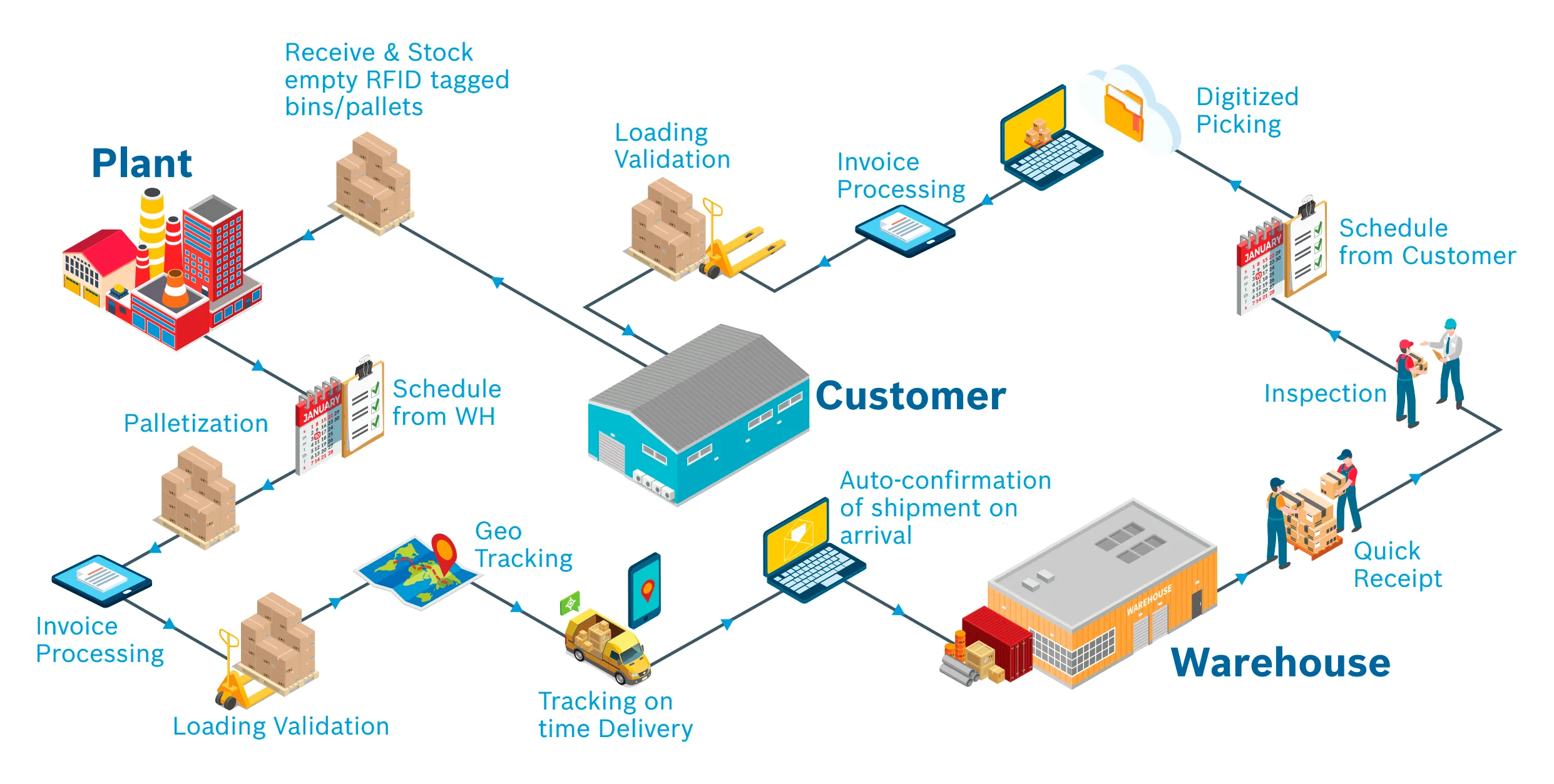
Your factory doesn’t operate in a vacuum. A modern cloud ERP provides unprecedented visibility and control over your entire supply chain, from raw material suppliers to finished goods delivery. The Best Cloud ERP for Manufacturing: Optimizing Production, Supply Chain, and Inventory in 2026 must excel in these areas.
Granular Inventory Management and Control
This goes beyond simple on-hand counts. A robust system manages inventory across multiple warehouses or bin locations, handles different units of measure, and supports various costing methods (e.g., FIFO, LIFO, Standard). It should provide ABC analysis tools to identify your most critical items and enable cycle counting programs to improve accuracy without shutting down for a full physical inventory.
Warning/Caution: A common pitfall is poor initial data accuracy. If you import inaccurate on-hand balances or flawed BOMs into your new ERP, you are simply digitizing a broken process. The system will make automated purchasing and production decisions based on bad data, leading to stock-outs or excess inventory. A thorough data cleansing and validation project is non-negotiable before go-live.
Demand Forecasting and Procurement Automation
Advanced systems use historical sales data and configurable algorithms (e.g., moving averages, seasonal trends) to generate accurate demand forecasts. This forecast then drives a Material Requirements Planning (MRP) engine, which is the core logic that determines what you need to buy and what you need to make, and when.
The MRP process works by “exploding” the BOM for forecasted demand, netting it against current inventory and open purchase/work orders, and then generating time-phased purchase and production suggestions. This automates the procurement process, ensuring materials arrive just-in-time and preventing capital from being tied up in unnecessary inventory.
Traceability and Compliance (Lot and Serial Tracking)
For industries like aerospace, medical devices, or food and beverage, full traceability is a legal requirement. A manufacturing ERP must be able to track specific lots or serial numbers from the moment a raw material is received, through every production step, and out to the final customer shipment.
In the event of a quality issue or recall, this “cradle-to-grave” traceability allows you to pinpoint the affected products within minutes, not days. This capability is built into the system’s core inventory transaction logic, recording the lot/serial number for every movement, consumption, and shipment.
Top Cloud ERP Solutions for Manufacturing: A 2026 Comparison
Choosing a vendor is a major decision. While many platforms claim to be “for manufacturing,” their capabilities vary wildly. Based on my hands-on implementation experience, here is an objective breakdown of some of the top contenders as we look toward 2026. This is a critical step in Choosing the Right Cloud ERP: A Strategic Framework for Enterprise Vendor Selection.

| Solution | Target Manufacturer | Key Strength | Potential Limitation |
|---|---|---|---|
| NetSuite ERP | SMB to Mid-Market | All-in-one platform with strong financials, CRM, and e-commerce. Excellent for companies that need a single system to run the entire business. | Manufacturing module (NetSuite Advanced Manufacturing) is powerful but can become complex and costly to configure for highly specialized needs. |
| Acumatica Cloud ERP | SMB to Mid-Market | Modern user interface and a unique resource-based pricing model (no per-user fees), which is great for growing companies. Strong manufacturing edition. | As a slightly newer player, its partner channel can be less mature in some regions compared to more established competitors. |
| Epicor Kinetic | Mid-Market to Enterprise | Deep, industry-specific functionality built over decades. Excellent for complex, make-to-order or engineer-to-order environments. | The user interface, while improved with Kinetic, can still feel less modern than cloud-native competitors. Can have a steeper learning curve. |
| Plex Smart Manufacturing Platform | Mid-Market to Enterprise | Born on the shop floor, it has arguably the strongest integrated MES/QMS capabilities. True top-to-bottom plant management. | Its core strengths are so focused on manufacturing operations that the back-office financial modules may feel less robust than finance-first ERPs. |
| Microsoft Dynamics 365 Business Central | SMB to Mid-Market | Seamless integration with the Microsoft ecosystem (Office 365, Power BI). A familiar interface for many users and a massive partner network. | Base manufacturing is solid, but complex requirements often necessitate third-party add-ons from its AppSource marketplace, which can increase complexity. |
Pro Tips for a Successful Cloud ERP Implementation
The best software in the world will fail if the implementation is poorly managed. Over the years, I’ve distilled the keys to success down to a few core principles. Ignore them at your peril.
- Start with Process Mapping, Not Software Features. Before you ever see a software demo, map your current business processes and, more importantly, design your ideal future-state processes. The goal is to adapt the software to your optimized process, not the other way around.
- Secure Executive Buy-In and Form a Cross-Functional Team. This cannot be just an “IT project.” The CEO must be the project’s champion, and you need a dedicated project manager and team members from every department—operations, finance, sales, engineering—to ensure all needs are met.
- Don’t Underestimate Data Migration Complexity. This is often the most challenging part of any ERP project. Cleansing, transforming, and validating years of data from legacy systems is a massive undertaking. Allocate significant time and resources to get it right.
- Prioritize User Training and Change Management. Your team is used to doing things a certain way. You must invest heavily in training them not just on which buttons to click, but on the new processes and the “why” behind the change. Resistance to change can kill a project.
- Plan for a Phased Rollout, Not a “Big Bang.” For most manufacturers, trying to switch everything on at once is too risky. A phased approach (e.g., financials first, then shop floor, then warehouse management) allows you to manage risk, learn lessons, and build momentum.
Frequently Asked Questions about Best Cloud ERP for Manufacturing: Optimizing Production, Supply Chain, and Inventory in 2026
What is the main benefit of cloud ERP for manufacturers?
The primary benefit is achieving a single, real-time source of truth across your entire operation. This eliminates data silos, enabling faster, more accurate decision-making from the shop floor to the executive office.
How long does a cloud ERP implementation take?
In my experience, a typical implementation for a small to mid-sized manufacturer can range from 6 to 12 months. Complex, multi-site enterprises should plan for 12 to 24 months, depending on the scope and level of customization.
Can a cloud ERP integrate with my existing machinery (IoT)?
Yes, absolutely. Modern cloud ERPs are built with open APIs (Application Programming Interfaces) designed specifically to connect with IoT sensors on equipment to automatically collect data on production counts, machine status, and cycle times.
Is cloud ERP secure for sensitive manufacturing data?
Reputable cloud ERP providers like Microsoft, Oracle (NetSuite), and those using AWS invest billions in security, far more than a typical manufacturer could. They offer robust data encryption, disaster recovery, and physical security measures that are typically superior to on-premise solutions.
What’s the difference between MRP and ERP?
Material Requirements Planning (MRP) is a component *within* an ERP system. MRP focuses specifically on balancing supply and demand for materials. ERP (Enterprise Resource Planning) is a broader system that integrates MRP with all other business functions like finance, HR, sales, and quality.
How much does a manufacturing cloud ERP cost?
Costs vary widely, but are typically priced on a per-user, per-month subscription model. For a mid-sized manufacturer, you can expect software costs to range from $150 to $350 per user per month, plus a one-time implementation fee that is often 1.5 to 2.5 times the annual software cost.
Which ERP is best for small manufacturers?
For smaller manufacturers, solutions like Acumatica or NetSuite often provide a good balance of powerful features and a scalable, all-in-one platform. The key is to find a solution that can grow with you without being overly complex at the start.
How does cloud ERP help with supply chain visibility?
It centralizes data from procurement, production, inventory, and logistics into one system. This allows you to track materials from supplier to customer, get real-time alerts on disruptions, and more accurately forecast demand and lead times.
What are the biggest risks in an ERP project?
The top risks are a lack of executive commitment, poor change management leading to low user adoption, and inaccurate data migration. Technical software failures are actually much less common than these organizational and process-related issues.
Does a cloud ERP support lean manufacturing principles?
Yes, a cloud ERP is a powerful tool for lean initiatives. It helps reduce waste (muda) by optimizing inventory (reducing carrying costs), improving production flow with better scheduling, and identifying quality issues faster to minimize scrap and rework.
Your Next Strategic Move
Selecting and implementing the Best Cloud ERP for Manufacturing: Optimizing Production, Supply Chain, and Inventory in 2026 is more than a technology upgrade; it’s a fundamental business transformation. By unifying your data and processes, you gain the visibility, agility, and control needed to navigate market volatility, improve efficiency, and drive profitable growth. The era of guesswork guided by outdated spreadsheets is over. The future of manufacturing is data-driven, connected, and resides in the cloud.
The journey begins not with a sales call, but with a strategic assessment of your current processes and future goals. Use the insights from this guide to define what your business truly needs to compete and win. Armed with a clear strategy, you can confidently evaluate partners and platforms to build a resilient, intelligent manufacturing operation for the years to come.
Originally posted 2026-05-01 13:56:40.